Cortisol Podcast
https://sites.google.com/site/chrishbiology/
Transcript:
Today, I will be explaining the hormone Cortisol in as little time as possible. I'm Chris, and this is Jugo's Podcast. (Intro Music: Happy Families - Sam Fonteyn)
Cortisol is widely considered the "stress hormone." It regulates glucose levels, blood pressure, blood vessel tone and contraction, and nervous system activation. Also, it prevents the release of substances that cause inflammation and acts as an anti-inflammatory. However, the main function is to stimulate gluconeogenesis, or the formation of glucose from amino acids, glycerol, lactate, and propionate. This formation of glucose keeps the body alive during times of stress, ergo, the "stress hormone."
When Cortisol is released at normal levels, the body functions just fine. However, an over or under release of Cortisol can cause negative effects. High levels of Cortisol can lead to many symptoms, including blood sugar imbalance, disruption of sleep, lowered immune system function, impaired cognitive function, decreased bone function, decreased muscle mass, elevated blood pressure, slow wound healing, and increased abdominal fat. On the other hand, low levels of Cortisol can cause blood sugar imbalance, disruption of sleep, lowered immune system function, brain foggy or light-headedness, mild depression, low thyroid function, lowered blood pressure, fatigue, and increased inflammation. So, on that note, it's pretty important to have normal levels of Cortisol.
Cortisol, or C21H30O5, is a steroid hormone that is synthesized from cholesterol. This type of hormone is made from cholesterol, as opposed to the amino acid derivates or other peptide hormones which are made of amino acids. Steroid hormones are also soluble in water and lipids.
Production and regulation of this hormone is accomplished via the Hypothalamic-Pituitary-Adrenal Axis, or HPA Axis. Production begins in the Hypothalamus, or a small gland within the brain that is part of the endocrine system. When the body experiences increased stress, physical activity, illness, high blood levels of Cortisol, or a differentiated sleep/wake cycle*, the Hypothalamus releases "Corticotropin-releasing Hormone", or CRH.
This CRH is then transferred to the Anterior Pituitary Gland, another small part of the brain that is part of the endocrine system. The CRH then stimulates the secretion of "Adrenocorticotropic Hormone", or ACTH, into the vascular system.
This ACTH is then carried via the blood to the Adrenal Cortex, where most (all) of the Cortisol production occurs. The Adrenal Cortex is responsible for the rapid biosynthesis of Cortisol and other corticosteroids from cholesterol, and produces Cortisol in response to the ATCH stimulation. It then acts back on the Hypothalamus and Pituitary Glands to suppress the production of CRH and ACTH via a negative feedback system. The Adrenal Cortex is located along the perimeter of the Adrenal Gland, which rests atop the kidneys.
Being a steroid hormone, Cortisol is soluble in many substances, including water, lipids, ethanol, methanol, and acetone. The cellular receptor for Cortisol is a Glucocorticoid Receptor, or NR3C1 or GCR. It is a receptor to which Cortisol and other Glucocorticoids bind. GCR's are found in almost every cell, and regulate genes controlling the development, metabolism, and immune response. These unbound receptors reside in the cytosol. Once bound, they either upregulate the anti-inflammatory proteins, or they suppress the pro-inflammatory proteins.
Thank you for listening, please tune in next week for more hormone discussion. (Outro Music: Blues in a Hurry- Cecil Norman)
Tuesday, February 25, 2014

Tuesday, February 4, 2014
Weak 4 (Days 39-40) -- A Quiz and some Jello?
So there was this man in his twenties that was found dead on the Thompson Creek Trail the other day. He had been shot (which is not likely due to California's strict gun regulations) in on the left lateral side 1 cm above the third rib (seen in red). The bullet exited 5 cm above the belly button.
 This is a sketchy case, mostly due to the angle of attack by which the victim was killed. The cause of death could have been an assassination from a long-range marksman positioned in the hills behind the man's path on the trail, due to the lack of additional bullet holes. In addition, the angle at which the victim was shot is incredibly steep, suggesting that the shooter was positioned perfectly for the bullet to enter at a 45 degree angle from behind him. However, this theory does not take into consideration the supine position in which the victim was found. This could be explained by the use of a high-caliber round. The force from a powerful round (possibly from a .50 caliber or 7mm Magnum) may have twisted the victim's body clockwise to a supine position in a spinning motion.
The path of the bullet shows the greatest effect to the LIVER, which was directly in the path of the bullet as it exited the body. As the eighth rib was fractured, which is closest to the liver, it is possible that the bullet itself punctured the liver directly or the fragments of the bullet broke the eighth rib, which in turn punctured the liver. Regardless of any other diagnosis, the most likely cause of death was internal bleeding, albeit from the liver, heart, or lungs.
Another possible cause of death, as the path of the bullet passes through the area containing the lungs and heart, is direct penetration of either of those internal organs, which would result in internal bleeding or inability to breathe. However, harm to the liver seems more likely, as it is the closest organ of the three to the exit location of the bullet and the extra punctured rib.
Also, the shock of a high-caliber bullet may have missed the internal organs and exited cleanly, leaving the victim to pass due to shock and external blood loss. However, as fragmentation spread around the body enough to break the eighth rib, this is not very likely.
This is a sketchy case, mostly due to the angle of attack by which the victim was killed. The cause of death could have been an assassination from a long-range marksman positioned in the hills behind the man's path on the trail, due to the lack of additional bullet holes. In addition, the angle at which the victim was shot is incredibly steep, suggesting that the shooter was positioned perfectly for the bullet to enter at a 45 degree angle from behind him. However, this theory does not take into consideration the supine position in which the victim was found. This could be explained by the use of a high-caliber round. The force from a powerful round (possibly from a .50 caliber or 7mm Magnum) may have twisted the victim's body clockwise to a supine position in a spinning motion.The path of the bullet shows the greatest effect to the LIVER, which was directly in the path of the bullet as it exited the body. As the eighth rib was fractured, which is closest to the liver, it is possible that the bullet itself punctured the liver directly or the fragments of the bullet broke the eighth rib, which in turn punctured the liver. Regardless of any other diagnosis, the most likely cause of death was internal bleeding, albeit from the liver, heart, or lungs.
Another possible cause of death, as the path of the bullet passes through the area containing the lungs and heart, is direct penetration of either of those internal organs, which would result in internal bleeding or inability to breathe. However, harm to the liver seems more likely, as it is the closest organ of the three to the exit location of the bullet and the extra punctured rib.
Also, the shock of a high-caliber bullet may have missed the internal organs and exited cleanly, leaving the victim to pass due to shock and external blood loss. However, as fragmentation spread around the body enough to break the eighth rib, this is not very likely.
Monday, February 3, 2014
Week 3 (Days 37-38) -- The Island of Uncertainty
As a grand reward for finishing the cancer research paper, Mr. Quick brought in the controversy of The Island, or the ethics behind human cloning for organ replacement (or stem cell implementation). We thought about it for a few seconds before it became an area of doubt in the back of our minds. It was difficult to answer explicitly, for some reasons (and in some cases) it is ethical, but in others it violates the laws of nature and morals. Just as our cancerous careers ended, another thought-provoking subject was thrust upon us.
 So there was this one character played by Ewan McGregor who was the genetic replica of this other rich guy, and his sole purpose was to be used for organ transplant and the benefit of his "sponsor". However, this guy starts questioning his true existence, which was carefully covered up by a lack of connection to the outside world (except through the easily-accessible engineers who worked there and spread their outside-influence around like a disease), and the withholding of information and brainwashing. So he escapes with the most attractive girl he can find and fights against millions of dollars worth of bounty hunters, police officers, national security, and an African guy. They go to the house of the real Ewan McGregor and expect him to be alright with two illegals staying in his house. When he's not alright with it, the fake guy bites him in a car and tricks the African guy into shooting him. He goes back to the weird cylinder of cloned people and sets them free by disconnecting a pipe in a back room. When the crazy leader guy (who wanted to dispose of millions of dollars of clones) played by the death-prone Sean Bean shoots him in the back with a future crossbow, he hangs Bean from the rail of an exploding facility. The clones are released to the world with the help of the African guy's change-of-heart, and they go out and destroy the world with their inconsistency. Also, there is an island.
Deeper down, this story has a lot to do about the ethics discussed earlier. Mr. Quick then led us to discovery of the use of stem cells in the correction of major problems. We also discovered that taking the stem cells from an older person would result in higher risks of cancer because the cells are already old and prone to mutation.
We posted some questions on the new blog page that was added for our classes. The questions, which involved some interesting topics and other average ones, sparked some amazing conversations within the class.
Expert's Note:
To see The Island for free, click here. (Don't tell anybody.)
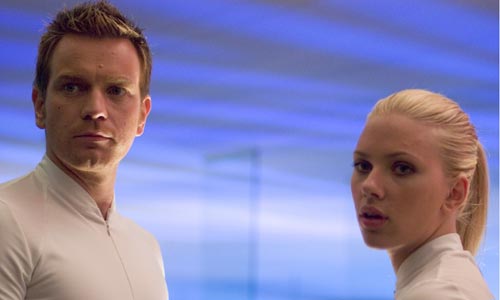 So there was this one character played by Ewan McGregor who was the genetic replica of this other rich guy, and his sole purpose was to be used for organ transplant and the benefit of his "sponsor". However, this guy starts questioning his true existence, which was carefully covered up by a lack of connection to the outside world (except through the easily-accessible engineers who worked there and spread their outside-influence around like a disease), and the withholding of information and brainwashing. So he escapes with the most attractive girl he can find and fights against millions of dollars worth of bounty hunters, police officers, national security, and an African guy. They go to the house of the real Ewan McGregor and expect him to be alright with two illegals staying in his house. When he's not alright with it, the fake guy bites him in a car and tricks the African guy into shooting him. He goes back to the weird cylinder of cloned people and sets them free by disconnecting a pipe in a back room. When the crazy leader guy (who wanted to dispose of millions of dollars of clones) played by the death-prone Sean Bean shoots him in the back with a future crossbow, he hangs Bean from the rail of an exploding facility. The clones are released to the world with the help of the African guy's change-of-heart, and they go out and destroy the world with their inconsistency. Also, there is an island.
 Deeper down, this story has a lot to do about the ethics discussed earlier. Mr. Quick then led us to discovery of the use of stem cells in the correction of major problems. We also discovered that taking the stem cells from an older person would result in higher risks of cancer because the cells are already old and prone to mutation.
We posted some questions on the new blog page that was added for our classes. The questions, which involved some interesting topics and other average ones, sparked some amazing conversations within the class.
Expert's Note:
To see The Island for free, click here. (Don't tell anybody.)
Week 2 (Days 34-36) -- Long Nights and Computers
This week in its entirety consisted of research without end. There was so much information about Glioblastoma Multiforme being crammed into my brain that I can no longer retain new information. Kudos to my mother, who has a Masters in Biology, and the Internet.
On Monday, I had my computer ready and available. Although I am still restricted from any access to the network, my handy hotspot on my phone allowed me to accomplish all kinds of research. I found several more articles pertaining to the subject (mostly reiterating the failure of RT and traditional therapies), that I will definitely implement into the paper. Failures are one step closer to success, and are worth noting somewhere along the way.
Wednesday was no different: same computer, same research. I learned, however, that it is incredibly difficult to get good work done under classroom-like conditions. With the distractions of others talking across the classroom, the screens of my friends on both sides, and Mr. Quick constantly judging my every action, it was hard to accomplish anything. It's easier to look aimlessly around the room or search something irrelevant online.
On Friday, we were all basically done. The last few finishing touches needed to go into the paper before it was turned in, which obviously could not have been accomplished during the class. My lack of ability made that night a very long one.
On Monday, I had my computer ready and available. Although I am still restricted from any access to the network, my handy hotspot on my phone allowed me to accomplish all kinds of research. I found several more articles pertaining to the subject (mostly reiterating the failure of RT and traditional therapies), that I will definitely implement into the paper. Failures are one step closer to success, and are worth noting somewhere along the way.
Wednesday was no different: same computer, same research. I learned, however, that it is incredibly difficult to get good work done under classroom-like conditions. With the distractions of others talking across the classroom, the screens of my friends on both sides, and Mr. Quick constantly judging my every action, it was hard to accomplish anything. It's easier to look aimlessly around the room or search something irrelevant online.
On Friday, we were all basically done. The last few finishing touches needed to go into the paper before it was turned in, which obviously could not have been accomplished during the class. My lack of ability made that night a very long one.
Week 1 (Days 33-34) -- Contracting Cancer
Welcome back to the new semester of Honors Bio! Already I am incredibly behind, and am posting most of my information right now. But it's okay, for most of everything will go well in the future.
As of this point, all of the blogs will be on a weekly basis. Most of the stuff I covered in the two or three classes during the week will be present on a single post titled with the week number (since the first week of the semester). I love the process: it allows me more time to focus on the fundamentals of biology, and can assist in the addition of more information in each post.
This week was the transition into the Cancer Paper. Our task was to research a certain cancer and aspect of it, and write a paper explaining our topic. In class today, the main goal was the research of the cancer. As I am usually forgetful, I had to resort to researching via my Iphone.
Glioblastoma Multiforme is one of the deadliest brain tumors in the world. Everyone who contracts any form of the cancer is doomed to die, usually within the first 15 weeks. There is no cure, and patients can only count down the potential days that remain. So, naturally, it was the first one towards which I was leaning. I researched several possible cures for it, including the application of Radiation Therapy and Chemotherapy, but did not find a close-to-successful cure. However, a promising study that combined Targeted Radiation Therapy and Drug-Loaded Nanocarriers produced a favorable result. Although it is very juvenile, this study will most likely be the basis for the paper.
A link to the paper can be found here.
(This site is pure gold, 10/10 would recommend to future researchers.)
Wish me luck, and hope my tendency to procrastinate doesn't get the best of me.
As of this point, all of the blogs will be on a weekly basis. Most of the stuff I covered in the two or three classes during the week will be present on a single post titled with the week number (since the first week of the semester). I love the process: it allows me more time to focus on the fundamentals of biology, and can assist in the addition of more information in each post.
This week was the transition into the Cancer Paper. Our task was to research a certain cancer and aspect of it, and write a paper explaining our topic. In class today, the main goal was the research of the cancer. As I am usually forgetful, I had to resort to researching via my Iphone.
Glioblastoma Multiforme is one of the deadliest brain tumors in the world. Everyone who contracts any form of the cancer is doomed to die, usually within the first 15 weeks. There is no cure, and patients can only count down the potential days that remain. So, naturally, it was the first one towards which I was leaning. I researched several possible cures for it, including the application of Radiation Therapy and Chemotherapy, but did not find a close-to-successful cure. However, a promising study that combined Targeted Radiation Therapy and Drug-Loaded Nanocarriers produced a favorable result. Although it is very juvenile, this study will most likely be the basis for the paper.
A link to the paper can be found here.
(This site is pure gold, 10/10 would recommend to future researchers.)
Wish me luck, and hope my tendency to procrastinate doesn't get the best of me.
(Unit 5 Test) Day 32 -- That was Quick
And then there was a test, and the semester ended!
For the fun stuff that happened:
Cell Tour Project: http://prezi.com/txkbdt1ymrc2/cell-structure-adventure/
Website: https://sites.google.com/site/chrishbiology/
(Not sure where this was, it was posted a while ago.)
For the fun stuff that happened:
Cell Tour Project: http://prezi.com/txkbdt1ymrc2/cell-structure-adventure/
Website: https://sites.google.com/site/chrishbiology/
(Not sure where this was, it was posted a while ago.)
Subscribe to:
Comments (Atom)