---
There are two main responses provided by the immune system in a non-specific situation: a physical barrier and an inflammatory response.When an area of the skin breaks and exposes blood, a barrier of thick skin and mucus membranes are formed to keep parasites and other malicious cells from entering the sterile environment within the body. (A layer of dead skin protects the layers of living cells underneath.) In a situation involving a harmful food entering the body, it reacts by inducing vomiting or diarrhea to cleanse the digestive system. Within this step, there are also many types of chemical barriers that impede bacterial progress, including a change in PH or salt level, or increase in antimicrobial agents in order to kill off bacteria.
The second response is an inflammatory response: blood vessels begin their process of vasodilation (to bring more blood to the area), and redness and heat are produced. When the body detects the pain, more white blood cells are sent to the area, and increased "coagulation" (blood clotting) occurs. Then phagocytes clean up after healing and consume bacteria and waste left from cells.

---
---
 Originally, when a pathogen enters the body, Macrophages (a specific type of cell) display the antigens (identifiers) on their surface. When a T-cell finds and binds to that antigen, an immune response that releases a chemical alarm called Interleukin-I triggers the T-cell to release Interleukin-II. This release causes the "proliferation" of B-cells and Cytotoxic-T cell. When the B-cells become activated by the Interleukin-II signal, they become plasma cells, which produce antibodies. Those antibodies bind to antigens found on the pathogens, and tell the Macrophages to kill the pathogen.
If a unwanted foreign pathogen enters the body, the antibodies will attach to their antigens via the antigen-binding site, and mark them for their destruction. During this process, some B-cells will instead become Memory-B cells, which remember the antibody necessary to kill the pathogen. (This is the reasoning behind vaccinations: the Memory-B cells make a "memory" of the pathogen, and can swiftly produce antibodies against it.) In the case of a new bacteria with new antigens, the plasma cells are not yet equipped with the proper antibody, and must find the correct antigen binder to defeat it.
---
---
When the same "infectious agent" enters the body, the Memory-B cells have already established their "memory" of the antigens, and when one binds to the already-recognized infectious antigen, the responding production of antibodies is quicker and to a greater extent. Since a new fitting antibody does not have to be found and created, this "second immune response" produces the already-known antibodies necessary to mark the pathogen again. The main antibody produced is the Immunoglobin-G (still secreted by plasma cells), as opposed to the Immunoglobin-M produced upon first contact. This explains why, once an illness is contracted (e.g. chicken pox), it rarely appears in the same system again, as the Memory-B cells can survive for many years.
---
---
 In order to identify itself to antibodies, each cell has a specific molecule to differentiate it from others. One type is the Major Histocompatibility Complex (MHC), coded by a group of genes called the Human Leukocyte Antigen (HLA), which identifies the good cells to the antibodies as a non-threat. T-cell receptors (TCR) are familiar with the antigenic peptides, and when these peptides pass the test, it keeps the antibodies from identifying these cells as bad.
When the antibodies come across a cell that does not contain the proper MHC to identify it as friendly, they mark it for destruction and follow the Memory-B cell process above. Although this is beneficial to us, in many cases, it does make many factors more difficult. Often when organs are transplanted from another human, the TCR's identify the new organ's cells as malicious, for they are not familiar and don't have a similar-enough MHC.
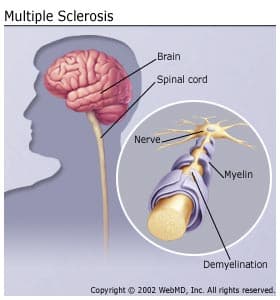
The whole process can be overthrown in the case of Molecular Mimicry, in which foreign entities can mimic the MHC of the body cells to the point where they are not attacked by the antibodies, making them immune to the immune system. Also, the harmful in the cases of autoimmune diseases. Autoimmunity, which is the inability of the MHC to be recognized as a friendly cell, is the cause for many diseases, including Multiple Sclerosis. (In which the immune system attacks the insulating covers of the spinal chord as well as nerve cells in the brain.)

No comments:
Post a Comment